

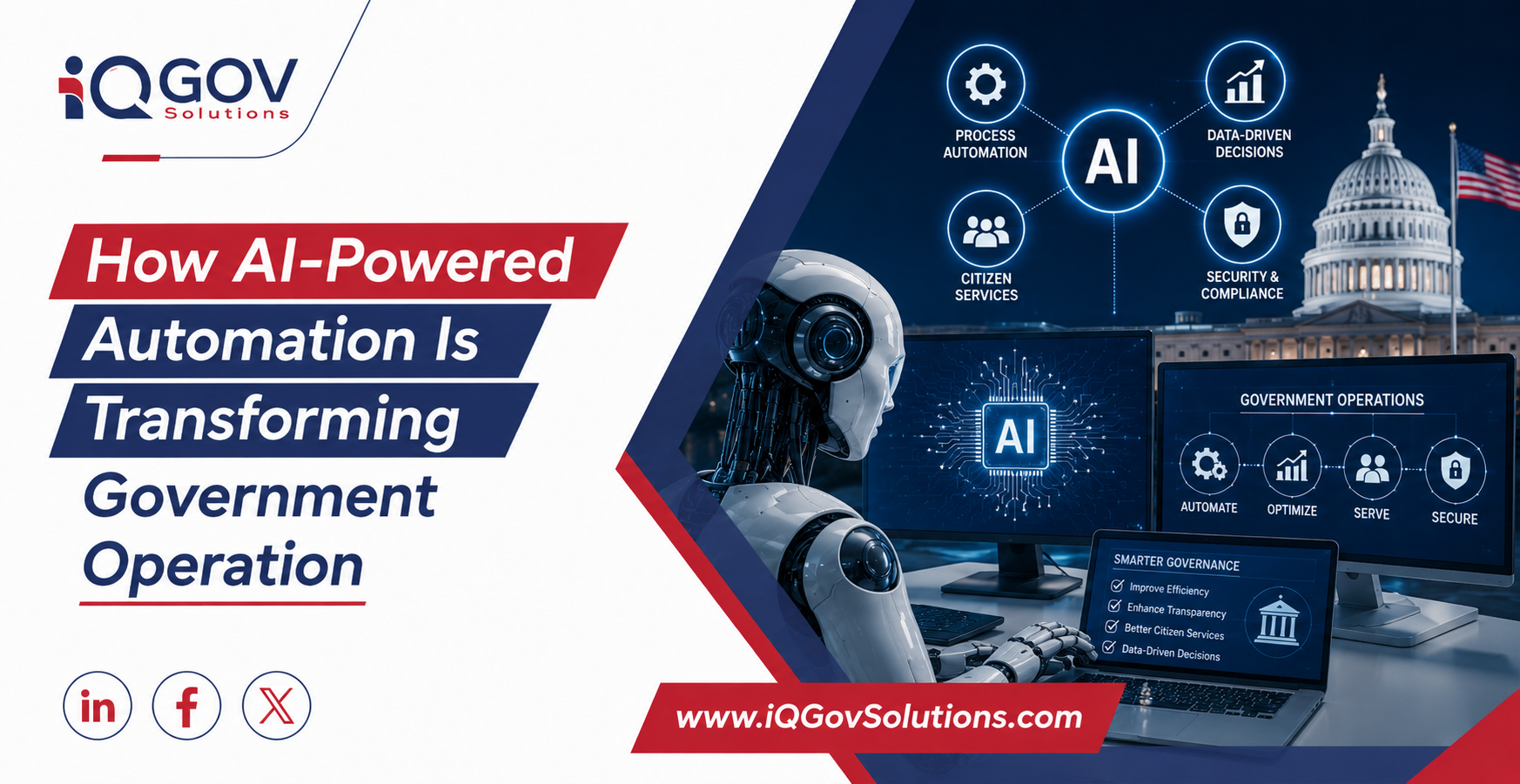
How AI-Powered Automation Is Transforming Government Operations
Government agencies today face increasing pressure to deliver faster services, improve operational efficiency, reduce costs, and meet growing citizen expectations. At the same time, many agencies continue to rely on manual processes, aging systems, and limited resources that make modernization difficult. Artificial Intelligence (AI)-powered automation is emerging as a powerful solution to these challenges. By automating repetitive tasks, streamlining workflows, and enabling data-driven decision-making, AI is helping government organizations operate more efficiently while improving the quality of public services.
As governments at the federal, state, and local levels continue their digital transformation journeys, AI-powered automation is becoming a key driver of operational excellence and citizen satisfaction.
What Is AI-Powered Automation?
AI-powered automation combines artificial intelligence technologies such as machine learning, natural language processing (NLP), computer vision, and predictive analytics with automation tools to perform tasks that traditionally required human intervention.
Unlike traditional automation, which follows predefined rules, AI can learn from data, recognize patterns, process unstructured information, and make intelligent recommendations. This allows government agencies to automate more complex processes while maintaining accuracy and compliance.
Examples include:
- Processing permit applications automatically
- Responding to citizen inquiries through AI chatbots
- Extracting information from documents
- Identifying fraudulent transactions
- Forecasting resource requirements
- Automating workflow approvals
The result is faster service delivery, reduced administrative burden, and more efficient use of taxpayer resources.
Why Government Agencies Need AI Automation
Government organizations face several operational challenges that make automation increasingly important:
1. Growing Citizen Expectations
Citizens expect government services to be as fast and accessible as those offered by private-sector organizations. Long wait times, paper-based processes, and delayed responses can negatively impact public trust.
2. Workforce Shortages
Many agencies struggle with staffing constraints and retirements among experienced personnel. AI can help bridge workforce gaps by automating repetitive administrative tasks.
3. Legacy Systems
Outdated technologies often limit efficiency and make it difficult to manage increasing workloads. AI-powered solutions can integrate with existing systems while enabling modernization.
4. Compliance and Regulatory Requirements
Government agencies must adhere to strict regulations and documentation standards. Automation helps ensure consistency, accuracy, and audit readiness.
5. Rising Operational Costs
Budget pressures require agencies to do more with less. Automation reduces manual effort, minimizes errors, and improves resource allocation.
Key Applications of AI-Powered Automation in Government
1. Document Processing and Records Management
Government agencies manage enormous volumes of paperwork, including applications, permits, contracts, forms, and reports.
AI-powered document processing can:
- Extract information from forms automatically
- Classify and organize records
- Digitize paper documents
- Validate data entries
- Reduce manual review time
2. Citizen Service Automation
Providing timely responses to citizen inquiries is a major challenge for many agencies. AI-powered virtual assistants and chatbots can:
- Answer frequently asked questions
- Provide service information 24/7
- Guide citizens through application processes
- Schedule appointments
- Route requests to appropriate departments
3. Workflow and Process Automation
Government processes often involve multiple approvals, reviews, and stakeholders. AI-driven workflow automation can:
- Route documents automatically
- Trigger approvals
- Monitor deadlines
- Send notifications
- Escalate issues when necessary
4. Data Analysis and Decision Support
Government agencies collect vast amounts of data but often struggle to transform it into actionable insights. AI can analyze large datasets to:
- Identify trends and patterns
- Generate predictive forecasts
- Support policy decisions
- Improve resource planning
- Enhance program effectiveness
5. Fraud Detection and Risk Management
Fraud, waste, and abuse can significantly impact government programs. AI systems can monitor transactions and identify anomalies that may indicate:
- Benefit fraud
- Procurement irregularities
- Tax compliance issues
- Financial misconduct
6. Workforce Management
Managing government personnel efficiently is critical to operational success. AI-powered workforce solutions help agencies:
- Forecast staffing requirements
- Optimize scheduling
- Monitor productivity
- Allocate resources effectively
- Identify training needs
7. Procurement and Contract Management
Government procurement processes are often time-consuming and document-intensive. AI automation can:
- Review contracts
- Monitor compliance requirements
- Analyze vendor performance
- Identify procurement risks
- Streamline approval workflows
Benefits of AI-Powered Automation for Government Agencies
1. Increased Efficiency
Automation eliminates repetitive manual tasks, allowing employees to focus on higher-value work that requires human judgment and expertise.
2. Faster Service Delivery
Applications, approvals, and citizen requests can be processed more quickly, reducing wait times and improving satisfaction.
3. Cost Savings
By reducing administrative workloads and minimizing errors, agencies can lower operational costs while maintaining service quality.
4. Improved Accuracy
AI systems reduce the risk of human error and help ensure consistent application of policies and procedures.
5. Enhanced Compliance
Automated workflows create clear audit trails and help agencies meet regulatory requirements more effectively.
6. Better Decision-Making
AI-generated insights enable leaders to make more informed, data-driven decisions that improve outcomes.
7. Improved Citizen Experience
Faster responses, self-service options, and streamlined processes contribute to a more positive public experience.
Real-World Government Use Cases
Governments worldwide are already leveraging AI-powered automation to improve operations.
1. Public Service Delivery
Many agencies use AI chatbots to handle routine inquiries, allowing staff to focus on more complex citizen needs.
2. Tax Administration
Revenue agencies are using AI to identify compliance risks, detect fraud, and improve audit effectiveness.
3. Transportation Management
AI helps analyze traffic patterns, optimize infrastructure planning, and improve public transportation services.
4. Healthcare Programs
Government healthcare organizations use AI to streamline claims processing, detect anomalies, and improve patient service delivery.
5. Emergency Response
AI-powered analytics help agencies predict risks, allocate resources, and enhance disaster preparedness.
Best Practices for Successful AI Implementation
To maximize success, government agencies should:
1. Start with High-Impact Use Cases
Identify processes with significant manual effort and opportunities for measurable improvement.
2. Establish Strong Data Governance
Ensure data quality, security, and compliance from the beginning of the project.
3. Focus on Human-AI Collaboration
AI should enhance human capabilities rather than replace critical decision-making functions.
4. Prioritize Security
Implement robust cybersecurity controls and continuous monitoring practices.
5. Invest in Training
Provide employees with the knowledge and skills needed to work effectively alongside AI-powered tools.
6. Measure Outcomes
Track key performance indicators, including processing times, cost savings, service quality, and citizen satisfaction.
Conclusion
AI-powered automation is no longer a future initiative; it is becoming a fundamental component of modern government operations. By streamlining workflows, reducing manual workloads, improving compliance, and enhancing citizen experiences, AI enables agencies to deliver better outcomes while making the most of limited resources.
However, successful implementation requires more than just technology. Government organizations need a strategic approach that balances innovation with security, compliance, transparency, and operational goals. From identifying the right use cases to integrating with existing systems and ensuring long-term scalability, the path to AI adoption requires experienced guidance and a deep understanding of public-sector environments.
At iQGovSolutions, we help government agencies navigate this transformation with technology solutions tailored to the unique challenges of the public sector. Whether you’re exploring workflow automation, AI-powered citizen services, intelligent document processing, or broader digital transformation initiatives, our team can help you build a roadmap that delivers measurable results while maintaining compliance and security.